2026 How to Choose Between IP and Analog Cameras?

Time:2026-04-29 Author:Mason
0%

Choosing the right surveillance system is crucial in today's security landscape. Many people grapple with the question, "What is the difference between IP and analog cameras?" Understanding these differences can significantly impact your security strategy.

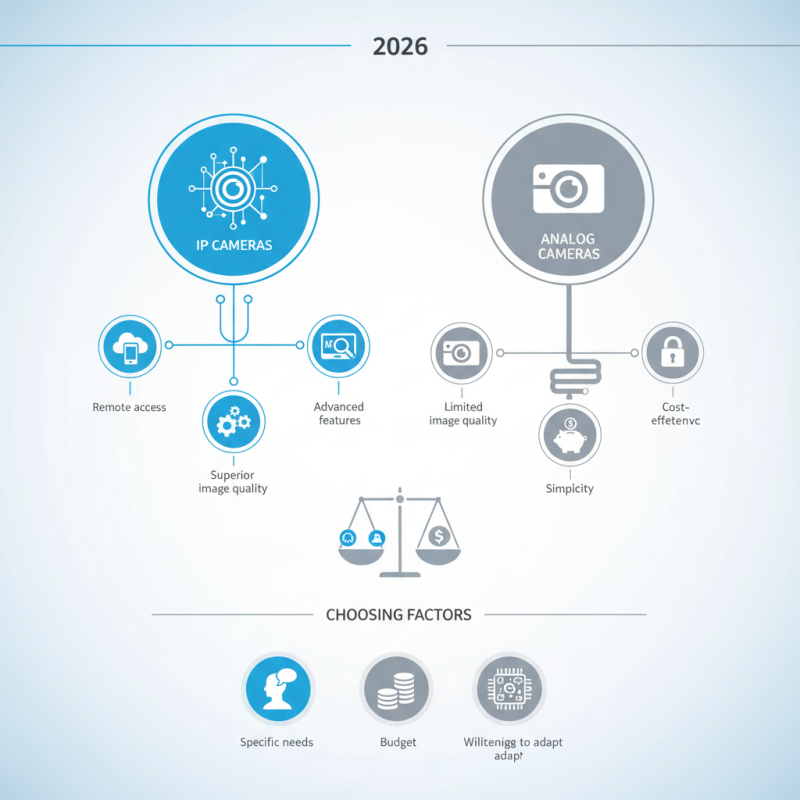
IP cameras transmit digital signals, providing superior image quality and advanced features. They connect to networks, allowing remote access and integration with other devices. In contrast, analog cameras rely on traditional coaxial cables. Their image quality and functionality are often limited compared to their IP counterparts.

However, the choice isn't always clear-cut. Some might prefer analog systems for their simplicity and cost-effectiveness. Others may feel overwhelmed by the technicalities of IP systems. It's essential to reflect on your specific needs, budget, and willingness to adapt to new technology. Making the right decision requires careful consideration.
2026 How to Choose Between IP and Analog Cameras?

Understanding the Basics: IP vs Analog Cameras Compared

When choosing between IP and analog cameras, understanding their differences is crucial. IP cameras utilize digital technology, allowing for higher resolutions and greater flexibility. According to a recent report from MarketsandMarkets, the global IP surveillance market is projected to reach $60 billion by 2025, highlighting its rapid adoption.

On the other hand, analog cameras are simpler and often less expensive to install. They are commonly used in legacy systems but may struggle with image quality in challenging lighting. Despite their lower initial cost, they can incur higher long-term expenses due to maintenance and the need for upgrades. It's essential to consider the long-term implications of your choice.

Compatibility is another key factor. While IP systems can offer smoother integration with other digital solutions, analog systems might require additional hardware to connect with newer technologies. This lack of flexibility can be a point of reflection for organizations aiming for future-proof solutions. Balancing budget constraints with technological advancements can be challenging, underscoring the importance of a well-informed decision.

Key Specifications: Resolutions, Frame Rates, and Image Quality Analysis

When choosing between IP and analog cameras, understanding key specifications is vital. Resolutions play a crucial role in image quality. IP cameras typically offer higher resolutions. Reports show that 4MP or even 8MP cameras are common in IP technology. In contrast, analog cameras usually max out around 2MP. This difference can significantly impact clarity.

Frame rates are another critical specification. Most modern IP cameras can deliver 30 frames per second (fps) or higher. This ensures smooth video playback, especially in high-motion scenarios. Analog cameras, however, often struggle to maintain such high frame rates. Data from the Security Industry Association indicates that the average frame rate for analog systems hovers around 15 fps.

Image quality is also not solely dependent on resolution or frame rate. Factors like lighting conditions and lens quality play essential roles. Black and white footage may provide clear images in low light, but color recording is generally less effective. Furthermore, IP cameras require more bandwidth, which may lead to complications in network management. Balancing these elements is paramount in making the right choice. Careful consideration of all factors will yield a reliable system.

Cost Considerations: Upfront and Long-Term Expenses of Both Systems

When deciding between IP and analog cameras, cost plays a major role. Upfront expenses for analog systems tend to be lower. Cameras and equipment are often less expensive. Installation can also be simpler, due to the use of coaxial cables. However, these initial savings may not tell the whole story.

Long-term costs should not be overlooked. IP cameras usually require more substantial investment upfront. They offer superior image quality and scalability. This means fewer cameras might be needed overall. Additionally, their integration with other systems can save money on upgrades and maintenance. These factors often lead to lower operational costs over time.

Consider the potential for downtime or system failures. Analog systems may need more frequent replacements. If a camera fails, it can lead to security gaps. An IP system, while initially costly, might prove more reliable. It's important to weigh these aspects carefully. Your choice can greatly impact your budget and security effectiveness.

Cost Comparison of IP vs Analog Cameras

Scalability and Flexibility: How Each System Adapts to Growing Needs

When deciding between IP and analog cameras, scalability and flexibility are crucial factors. IP cameras easily adapt to expanding security needs. They connect over the internet, making it simple to add more devices. This allows organizations to respond to changing demands without major overhauls. The installation process is often less invasive, too.

Analog systems can be more challenging to scale. Adding more cameras might require significant wiring and infrastructure changes. This can lead to increased costs and complexity. In many cases, the initial setup may feel straightforward. However, future growth often reveals limitations. Businesses risk outgrowing their systems if they aren't planned with expansion in mind.

Consider not just current needs but future growth. It's easy to underestimate how quickly requirements can change. Some might find the flexibility of IP systems overwhelming. They may perceive complex integrations as a challenge. Realizing the importance of adaptability can guide better decision-making. Balancing immediate needs with long-term vision is key.

Installation and Maintenance Requirements for IP and Analog Cameras

When choosing between IP and analog cameras, installation and maintenance are crucial factors. IP cameras require a network setup, including routers and switches. This can complicate installation in areas lacking cabling infrastructure.

In contrast, analog cameras use coaxial cables, making them easier to install in traditional setups. However, they may require more effort to upgrade or scale in the future.

Maintenance varies significantly between the two types. IP cameras often provide remote access for updates and troubleshooting. This can be a time-saver, but it demands familiarity with network settings.

Analog cameras typically require physical inspection and maintenance. This might include checking cables and connections regularly. Users might overlook these tasks, leading to potential security gaps.

Both options have their pros and cons. IP cameras offer high resolution and scalability, while analog cameras provide simplicity. Users should reflect on their specific needs and capabilities. Understanding the complexities of both systems helps ensure a reliable surveillance setup.

FAQS

: What is the main difference between IP and analog cameras?

: IP cameras use digital technology for higher resolutions. Analog cameras are simpler and less expensive but have lower quality.

How do resolutions affect camera choice?

IP cameras can reach higher resolutions, like 4MP or 8MP. Analog cameras max out around 2MP, impacting clarity significantly.

What about frame rates and video playback?

Modern IP cameras often provide 30 fps or higher. Analog cameras typically average 15 fps, which may affect smooth playback.

Are there long-term cost differences between the two systems?

Yes, analog systems are cheaper initially, but may incur higher long-term expenses due to maintenance and replacements.

Which type of camera offers better image quality?

IP cameras generally deliver better image quality, but environmental factors like lighting also affect performance.

How does integration with other technologies differ?

IP systems integrate smoothly with other digital solutions. Analog systems often need extra hardware, limiting flexibility.

Is installation easier with either type?

Analog systems are simpler to install, using coaxial cables. However, initial savings may lead to future costs and challenges.

What happens if an analog camera fails?

A failure can create security gaps, requiring prompt attention to avoid risks in monitoring.

How does bandwidth usage differ between IP and analog cameras?

IP cameras require more bandwidth, which can complicate network management, requiring careful planning for optimal performance.

What should be considered when making a camera choice?

Balance factors like budget, image quality, installation, and long-term expenses to select the best system for your needs.

Conclusion

When considering surveillance systems, a common question arises: "What is the difference between IP and analog cameras?" Both types have distinct characteristics that can influence your decision. IP cameras typically offer higher resolutions and better image quality, benefiting from digital transmission and advanced features like remote access and scalability. In contrast, analog cameras are generally simpler and cost-effective for basic monitoring needs, though they may face limitations in resolution and adaptability.

Cost considerations play a crucial role, as initial expenses for IP systems can be higher due to advanced technology, while analog systems may appear cheaper upfront but can incur longer-term costs in maintenance and upgrades. Moreover, scalability and flexibility differ significantly; IP cameras can easily accommodate growing security requirements without major infrastructure changes. Understanding these key specifications, along with installation and maintenance challenges, will help determine the best choice for your surveillance needs.

Mason

Mason

Mason is a seasoned marketing professional with a deep expertise in the company's offerings and a passion for driving brand awareness. With a strong background in digital marketing strategies, he has an innate ability to connect with diverse audiences and effectively communicate product benefits.......