Security cameras are essential for modern safety and surveillance. As technology advances, features like WDR become crucial. So, what is WDR in security cameras and why does it matter? WDR, or Wide Dynamic Range, enhances image clarity in challenging lighting environments. It improves details in bright and dark areas of an image.
Effective surveillance depends on clear visuals. When facing backlighting or harsh sunlight, standard cameras struggle. WDR helps capture balanced images, ensuring that vital details are not lost. By providing clear visuals, it increases safety and aids in investigations. High-quality images allow for better identification and analysis.
Understanding WDR's role is vital for anyone considering security systems. Some may overlook this feature, thinking traditional cameras will suffice. However, the difference is significant. Choosing a camera without WDR could lead to missed details. In critical situations, this could have severe consequences. WDR makes a noticeable impact on security footage quality.
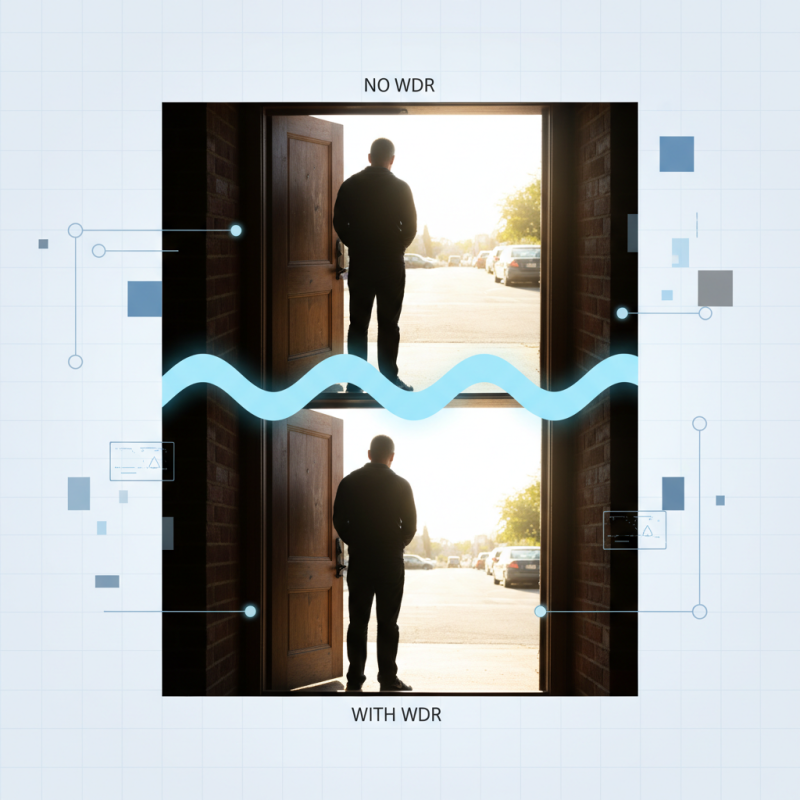
Wide Dynamic Range (WDR) is an essential feature in security cameras. It helps balance light levels in scenes with both bright and dark areas. This capability is particularly important for viewing entrances, parking lots, and public spaces. In these environments, lighting conditions often fluctuate, creating challenges for standard cameras.
When a scene is too bright or too dark, details can be lost. A camera without WDR may leave shadows unrecognizable or overexpose bright sunlight. By capturing images at different exposures, WDR combines them into a single image. This process reveals details in both the highlights and shadows. The result is a clearer, more usable video feed.
Despite its advantages, WDR isn’t foolproof. In situations with extreme light contrasts, it may struggle. Users should be aware of its limitations. Real-world applications often reveal scenarios where testing is necessary. Experimenting with different settings can enhance the effectiveness of WDR in unique environments. This nuanced approach is key to optimizing security footage quality.
Wide Dynamic Range (WDR) is crucial in security cameras, especially in challenging lighting conditions. Traditional cameras struggle in bright sunlight and deep shadows. WDR helps balance these extremes, ensuring clear images. This technology enhances visibility in high-contrast environments, such as doorways or windows. It captures details previously lost in excessive light or darkness.
When employing WDR, surveillance systems can deliver reliable performance. In retail spaces, for instance, proper lighting can prevent theft and enhance customer safety. With enhanced image clarity, operators can quickly identify suspicious behaviors. Moreover, WDR can make night surveillance more effective. It reduces glare from streetlights or car headlights, producing usable footage.
However, cameras with WDR are not perfect. They may still struggle in severely uneven lighting or during rapid light changes. Users often overlook these limitations, expecting flawless results. Understanding WDR's capabilities and constraints is essential for optimal security solutions. By recognizing its importance, businesses can make informed decisions about surveillance systems.
Wide Dynamic Range (WDR) technology plays a crucial role in security cameras. It helps to balance light in challenging environments. For instance, consider a camera aimed at a doorway with bright sunlight outside and shadowy interiors. Without WDR, the image can end up overexposed or too dark. This leads to critical details being lost. WDR adjusts the brightness levels in different areas, ensuring clear images.
In low-light conditions or when strong backlighting occurs, WDR retains clarity. The technology captures details in both dark and bright areas simultaneously. It achieves this by blending different exposure levels. When monitoring an area like a parking lot at dusk, WDR ensures that shadows don’t obscure the view. Sometimes, this technology may struggle in extremely high-contrast scenarios. The results can vary based on the environment and camera angle.
The enhancement that WDR brings can be invaluable. It adds an extra layer of reliability for surveillance. High-quality images allow for accurate identification, which is essential in security applications. However, users may find that not all WDR implementations are equal. Observing different setups can lead to insights on what works best in specific lighting conditions. Finding the ideal solution takes experience and observation.
This chart illustrates the enhancement in image quality provided by WDR (Wide Dynamic Range) technology in security cameras across different lighting conditions. The data compares image clarity with WDR enabled versus without WDR in various scenarios.
Wide Dynamic Range (WDR) is a key feature of modern security cameras. It enhances image quality in challenging lighting conditions. Many environments have bright and dark areas, making it hard to capture clear images. Cameras with standard dynamic range may struggle in these situations. They can produce washed-out highlights or dark shadows. This compromises the reliability of surveillance footage.
In contrast, WDR technology balances exposure. It captures details in both bright and dim areas simultaneously. This allows for clearer images and better identification of subjects. Security cameras with WDR deliver sharper images in high-contrast settings, like doorways or entrances. They help ensure that crucial details are not lost due to poor lighting. However, not all WDR implementations are equal. Some may still fail in extreme conditions.
Choosing the right camera involves understanding these limitations. Testing in specific environments is vital. Observing the WDR performance can lead to better security decisions. While WDR improves visibility, one must consider its consistency across various lighting scenarios. This leads to a more fortified security system.
When selecting a security camera with Wide Dynamic Range (WDR), several factors are critical. WDR technology manages differing light conditions effectively. This is especially important in areas with strong sunlight and deep shadows. Cameras with higher WDR ratings can help produce clearer images. These details are vital for identifying individuals or objects in complex environments.
Consider the installation environment. If your setup is outdoors, look for models with a broad range of WDR. Pay attention to the camera’s sensitivity. A higher sensitivity can improve performance during low-light conditions. Furthermore, consider the resolution of the camera. High-resolution cameras can enhance detail in both bright and dark areas. This is crucial for security purposes.
Evaluate your specific needs before making a choice. Not every security setup requires high WDR capabilities. Sometimes, simple solutions may suffice. However, ensuring that your security camera can adapt to lighting changes can enhance your surveillance system's reliability. It's important to reflect on the environment and potential challenges to find the best fit for your needs.
: WDR is a technology in security cameras that improves image clarity in challenging lighting conditions.
WDR balances extreme lighting, ensuring clear images in high-contrast environments like doorways and windows.
WDR enhances visibility, helping operators quickly spot suspicious behavior and improving customer safety.
WDR cameras can struggle in uneven lighting and may not perform well during rapid light changes.
Evaluate the installation environment, camera sensitivity, and resolution to ensure effective performance.
Not necessarily. Some situations may require only basic solutions, depending on specific security needs.
WDR reduces glare from lights, producing clearer footage during nighttime conditions.
Understanding WDR's constraints helps in making informed decisions about security systems for better outcomes.
Higher resolution improves detail in all lighting conditions, which is critical for identifying objects clearly.
Assessing your environment and challenges can help identify the best surveillance system for your specific situation.
Wide Dynamic Range (WDR) technology in security cameras is essential for enhancing image clarity in environments with challenging lighting conditions. WDR balances bright and dark areas, ensuring that details are visible regardless of significant light contrasts. Understanding "What is WDR in security cameras and why does it matter?" is crucial for anyone selecting a surveillance system, as it directly impacts the effectiveness of monitoring.
When comparing WDR to standard dynamic range, it becomes clear that WDR provides a significant advantage in capturing images in varied lighting scenarios, such as outdoor settings with direct sunlight and shaded areas. When choosing a WDR-enabled camera, factors such as the level of dynamic range, the environment in which it will be used, and the specific surveillance needs should be considered to ensure optimal performance.

AxizView Camera