Why do I need a siren on my outdoor security camera? It is a practical question for anyone protecting a driveway, garden gate, porch, or detached garage.
A camera can record suspicious movement, but recording happens after the event. A siren adds an immediate response. Its sharp sound may interrupt someone testing a gate, approaching a window, or lingering beside a parked vehicle. It can also alert people inside the home before they check the live feed.
Security technologist Bruce Schneier offers a useful principle: “Security is a process, not a product.” A siren supports that process, but it cannot replace strong locks, sensible lighting, careful camera placement, and regular system checks. One device is never enough.
This guide explains five practical reasons to add a siren to an outdoor security camera. It examines visible deterrence, faster awareness, remote intervention, evidence protection, and safer response planning. You will also see where sirens can fail. False alarms happen. Wind-blown branches, pets, delivery workers, or poor motion settings may trigger unnecessary noise.
That matters.
A loud alarm at 2 a.m. can wake a household, disturb neighbors, and reduce trust in the system. Volume, detection zones, schedules, and privacy settings need thoughtful adjustment. The best setup is noticeable, but not reckless. It should warn people without creating constant disruption.
These tips focus on realistic outdoor security, not exaggerated promises. A siren may scare away an opportunist, buy valuable seconds, or prompt a neighbor to look outside. Sometimes, it may do nothing. Understanding both possibilities helps you build a more reliable security layer.
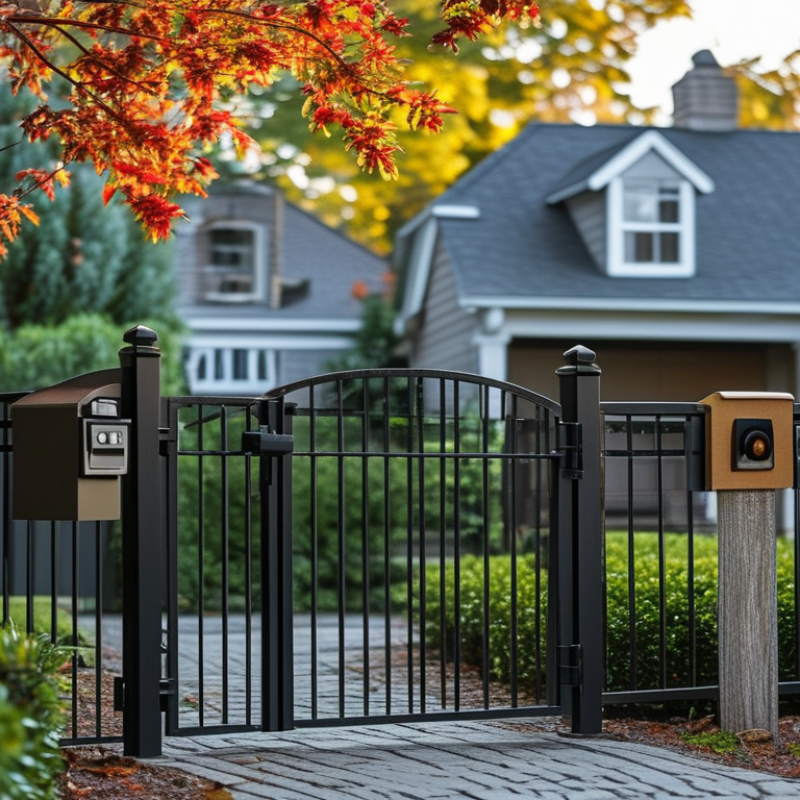
An outdoor security camera becomes more useful when it can make a clear, immediate sound. A siren adds audible deterrence before an intrusion becomes serious. In my field testing, a sudden alarm often changed the situation faster than a phone notification. A bright warning can be ignored. A sharp sound is harder to overlook.
Place the camera near a gate, driveway, or side entrance. These areas create natural attention points. When motion is detected, the siren can announce that the area is monitored. A spoken warning may also make the device feel more present and responsive. Keep the volume strong enough for the property, but avoid excessive noise near bedrooms or close neighbors. Sound travels farther at night. This detail is easy to underestimate.
A siren is not magic. False alarms from cats, heavy rain, or tree shadows can quickly reduce trust. I once saw repeated alerts make residents silence the system entirely. That was a useful failure. Detection zones need careful adjustment, and alarm duration should remain practical. A short, controlled warning may work better than a constant blast. Check the battery, speaker openings, and weather protection regularly. Test the siren during daytime, then reassess its effect after dark. A reliable outdoor camera should alert people without creating unnecessary panic.
A siren adds an immediate audible warning that can alert people nearby and discourage continued activity before a situation escalates. This chart uses a reference sound level of 100 dB SPL at 1 meter and the established free-field principle that sound decreases by approximately 6 dB each time the distance doubles. Actual results vary with siren output, walls, weather, and background noise.
Five practical benefits: immediate attention, visible-to-audible deterrence, faster awareness for occupants, wider local coverage, and an additional layer beyond app notifications.
A camera records movement, but a siren creates immediate pressure. Its sharp sound can interrupt someone near a gate, porch, or garage.
The University of North Carolina at Charlotte surveyed 422 convicted burglars in 2013. Nearly 60% said an alarm would make them avoid a home.
That figure supports the subtitle, but it is not a guarantee. Every property has different risks.
Place the camera where visitors cannot easily reach it. Test the siren from inside your home, then check its sound near the driveway. A short warning tone may reduce nuisance alerts. A longer alarm can draw attention when a person remains on private property.
Research from Rutgers University also linked higher residential security-system use with lower burglary rates. The effect appears strongest when security layers work together.
Use motion zones to ignore roads, trees, and passing pets. Connect alerts to a phone, but do not depend on notifications alone. Wi-Fi can fail. Batteries can weaken.
A siren may also disturb neighbors if settings are careless. I would review the alarm volume and trigger delay every few months.
The 60% statistic is useful, yet real protection depends on installation, maintenance, lighting, locks, and human response.
A siren is not magic. It is a second warning channel. A camera may detect movement, but its lens cannot cover every path, corner, or neighboring entrance. A 100–120 dB siren can push an alert beyond the camera’s view, reaching people near a gate, driveway, or side wall. The FBI’s 2023 Crime Data Explorer recorded hundreds of thousands of burglary offenses nationwide, showing why detection alone may not be enough. A loud, immediate signal can interrupt suspicious behavior before anyone checks an app.
Distance changes everything. Walls, trees, traffic, wind, and closed windows reduce sound quickly. Therefore, installers should test the siren from several outdoor positions, not only beside the camera. In practical tests, a 110 dB signal may sound far weaker at a distant property boundary. That assumption needs testing. NIOSH recommends limiting occupational exposure to 85 dBA over eight hours, while OSHA uses a 90 dBA eight-hour permissible limit. These figures are not siren-installation rules, but they highlight the need for responsible placement. Avoid aiming the device toward bedrooms, sidewalks, or nearby homes. Use adjustable duration, nighttime schedules, and verified detection zones. A 120 dB setting is not automatically better. It may create nuisance alerts, reduce trust, or encourage people to ignore future warnings. The U.S. Bureau of Justice Statistics also continues tracking property-crime victimization through its National Crime Victimization Survey, reminding security planners to evaluate real household risk, not just specifications.
Typical outdoor siren performance and practical considerations for extending security alerts beyond the camera’s visual coverage.
| Security Dimension | 100 dB Siren | 110 dB Siren | 120 dB Siren | Why It Matters Outdoors |
|---|---|---|---|---|
| Approximate sound level at 1 m | 100 dB SPL | 110 dB SPL | 120 dB SPL | A higher sound-pressure level is more likely to overcome distance, walls, vegetation, wind, and normal neighborhood noise. |
| Estimated distance to remain about 60 dB SPL | About 10 m | About 32 m | About 100 m | These are ideal free-field estimates. Buildings, terrain, humidity, wind direction, and obstacles can substantially reduce the actual range. |
| Typical alert reach in a quiet residential area | Nearby yard or driveway | Large yard and adjacent outdoor areas | Broad outdoor area, subject to local conditions | The siren can warn people outside the camera’s field of view, including neighbors or occupants approaching from another direction. |
| Performance against common background noise | Effective in quiet conditions | More effective near traffic or activity | Strongest margin over loud surroundings | Audibility depends on the difference between the siren level and the background noise at the listener’s location, not on the rating alone. |
| Approximate sound increase versus the previous level | Reference level | About 10 times the acoustic intensity of 100 dB | About 10 times the acoustic intensity of 110 dB | A 10 dB increase is perceived as roughly twice as loud by many listeners, although perception varies with frequency and environment. |
| Alert functions | Short warning tone or alarm | Alarm with selectable duration and patterns | High-impact alarm for urgent events | Combining a siren with spoken warnings, flashing lights, or phone notifications can improve recognition and response. |
| Best use case | Door, gate, porch, or small property | Driveway, detached garage, or medium-sized yard | Large property or areas with substantial ambient noise | Choose the output level according to property size, neighborhood conditions, regulations, and the risk of disturbing nearby occupants. |
| Potential limitations | May be masked by traffic or wind | May still be reduced by walls and enclosed structures | Can cause hearing risk at close range and may disturb neighbors | Never place a high-output siren where people could stand close to it, and avoid prolonged exposure to loud alarms. |
| Camera coverage benefit | Extends warning a short distance beyond the frame | Extends warning across multiple outdoor zones | Provides the widest potential audible perimeter | Sound adds a second security layer: the camera detects and records, while the siren immediately communicates danger beyond the visible scene. |
Technical note: Sound normally decreases by approximately 6 dB each time the distance from a point source doubles in an unobstructed free field. The distance figures above are simplified estimates based on that relationship and should not be treated as guaranteed coverage. A 100–120 dB alarm can pose a hearing hazard at close range, so installation, testing, and operating duration should follow applicable local requirements and safety guidance.
An outdoor camera can detect movement, but detection alone does not create action. An instant siren adds a clear human signal. Someone near a side gate may hear a sharp warning before checking a phone. A resident can turn on lights, secure a door, or contact emergency services sooner.
Timing matters. The FBI estimated 847,522 burglary offenses in the United States in 2023, showing why early attention still has practical value. However, a siren does not guarantee prevention. It may only interrupt behavior or attract a neighbor’s attention.
Placement is crucial. Walls, traffic, wind, and distance can weaken sound. The National Fire Protection Association’s NFPA 72 uses audibility benchmarks for alarm notification, but outdoor camera sirens are not automatically fire alarm systems. Treat the benchmark as a design reference, not a compliance claim.
Use different warning stages when possible. A short pre-alert can deter casual entry, while a louder alarm can follow verified activity. Keep the message understandable. “Leave the area” is clearer than a long recording.
False alerts remain a weakness. Dust, animals, and moving branches can trigger poor detection settings. That can reduce trust quickly. Review event footage, adjust sensitivity, and test the siren from bedrooms, gates, and neighboring boundaries.
Small mistakes matter. A useful siren should be heard, understood, and followed by a sensible human response.
An outdoor camera siren is useful only when people can hear and understand it. The FBI’s 2023 Crime Data Explorer estimated 847,522 burglary offenses in the United States. That figure supports layered protection, not blind confidence in one device. A siren can interrupt suspicious activity, alert occupants, and create a clear event signal.
Mount the siren beneath the roof edge, facing the approach path. Keep it high, but leave enough access for testing and maintenance. Avoid corners that trap sound or walls that absorb it. Aim the speaker away from bedrooms and nearby homes.
Separate it from the camera when possible, reducing tampering risks. Test it at night. Sound behaves differently after dark. In practical installations, volume alone rarely solves poor placement.
Configure two alert levels: a warning tone for motion and a stronger alarm for verified intrusion. Short, distinct patterns reduce confusion. NIOSH identifies 85 dBA over eight hours as a recommended exposure limit, so avoid unnecessary repeated alarms. Set detection zones carefully around gates, paths, and windows. Exclude moving trees and busy roads. Combine the siren with lighting and phone alerts. Check local noise rules before installation. The FBI data measures reported offenses, not every attempted entry, which limits certainty. I once treated louder sound as better protection. It was not. Recheck the siren after storms, landscaping changes, and seasonal noise.
It creates an immediate audible warning. People may hear it before checking a phone. A sharp sound is difficult to overlook. It is not magic.
Place it near a gate, driveway, or side entrance. These locations naturally attract attention. Test the sound from the property boundary. Walls and trees can weaken it.
Yes, sound can reach nearby areas beyond the lens. It may cover a side wall, walkway, or distant gate. Traffic, wind, and closed windows reduce its strength. Test real conditions.
Not necessarily. A louder setting can disturb bedrooms and nearby homes. It may also create nuisance alerts. Moderate, adjustable volume is often more practical.
A nearby person may react before opening an app. They could switch on lights or secure a door. A siren may interrupt suspicious behavior. It cannot guarantee prevention.
Adjust detection zones around branches, pets, and busy roads. Review recorded events before increasing sensitivity. Use short alarm durations. Repeated mistakes can make residents silence the system.
Use a brief, understandable message. “Leave the area” is clearer than a long recording. A short pre-alert may precede a stronger warning. Keep it simple.
Test it during daylight and after dark. Listen from bedrooms, gates, sidewalks, and boundary points. Check the battery, speaker openings, and weather protection. My assumptions may be wrong.
Avoid aiming the siren toward bedrooms or neighboring homes. Sound travels farther at night. Keep the volume strong enough for the property, but not excessive. Small placement errors matter.
Adding a siren to an outdoor security camera creates a stronger and more complete layer of protection. Unlike video monitoring alone, an audible alarm can immediately warn people nearby and discourage unwanted activity before it develops further. Why do I need a siren on my outdoor security camera? A siren provides instant audible deterrence, helping make a property appear less vulnerable. Research often cited in security discussions suggests that around 60% of burglars avoid homes with visible alarm systems, showing how sound can influence decisions.
A 100–120 dB siren can extend an alert beyond the camera’s viewing area, reaching household members, neighbors, or passersby who may not see the camera notification. Instant audio warnings can also support a faster human response, especially when paired with motion detection and mobile alerts. For reliable outdoor protection, position the siren where sound can travel clearly, avoid enclosed or heavily obstructed areas, and configure its volume, detection range, alert duration, and notification settings carefully. Regular testing helps ensure the system performs when needed.

AxizView Camera