7 Best Reasons Why Some Security Cameras Are So Cheap

Time:2026-11-24 Author:Amelia
0%

Why are some security cameras so much cheaper than others? The price gap can come from more than a brand name or a sale. A compact indoor camera may use a basic image sensor, limited night vision, and local storage, while a costlier model adds sharper video, weather protection, or continuous recording. Those differences affect what the camera can capture and how reliably it works. Cheap does not always mean poor.

Still, low prices can reflect trade-offs that are easy to miss on a product page. Check whether the camera needs a separate hub, paid cloud plan, or proprietary power adapter. Look for clear details on resolution, field of view, Wi-Fi support, software updates, and warranty. A low sticker price may not show the full ownership cost. Small print matters.

This guide explores seven common reasons, including simpler components, fewer features, lower support costs, and different storage or subscription models. It also explains where savings may be sensible and where they can weaken everyday security. Compare manufacturer specifications, then consider your home, lighting, internet connection, and installation needs. The cheapest option may fit a hallway. It may disappoint outdoors. Product claims can be vague, and price alone cannot prove quality. Keep that in mind while weighing the real value of each camera.
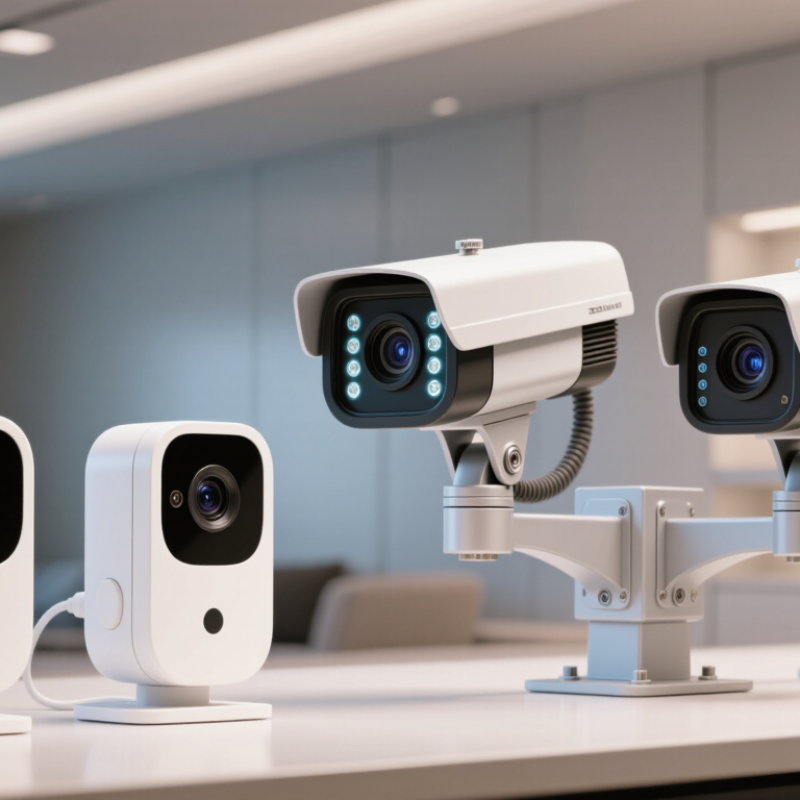
7 Best Reasons Why Some Security Cameras Are So Cheap

How Camera Design and Component Choices Affect Cost

A low price often starts with a simpler camera design. A small image sensor may produce softer detail, especially in dim rooms. The lens can also have a narrower field of view, so one corner of a doorway may disappear from the picture. These choices reduce parts and assembly costs. They can be sensible for watching a well-lit entryway, but less useful across a dark yard.

Components matter, too. Fewer infrared lights may leave night scenes grainy or uneven. A basic processor might handle ordinary video well but struggle with motion-heavy scenes. Some inexpensive models rely on Wi-Fi and cloud storage rather than built-in local storage. That keeps the camera compact, though a weak connection can interrupt viewing. Simple plastic housings cost less than reinforced, weather-sealed ones. Check the stated operating conditions before placing a camera outdoors.

There is no single “cheap camera” design. Manufacturers may save money through efficient production, or by using lower-grade components; the price alone does not tell you which. That matters. Compare sample footage, storage options, and warranty terms, not just resolution numbers. A higher megapixel count cannot fix a poor lens or weak night lighting. It is tempting to treat a low price as a warning sign. That assumption can be wrong, but bargain models do have limits. Think about the exact scene you need to monitor, then decide which trade-offs you can accept.

7 Best Reasons Why Some Security Cameras Are So Cheap

How camera design and component choices can reduce costs

This qualitative scale compares potential cost-saving influence, not actual prices or measured savings. Simpler image sensors, fixed lenses, basic housings, wired power, and fewer moving parts can reduce hardware complexity. Basic storage and fewer smart features can also reduce component and processing requirements. Actual costs vary by design and specifications.

Why Basic Sensors and Lenses Lower the Price

A low-priced security camera may use a basic image sensor with fewer pixels or limited low-light sensitivity. In bright daylight, a driveway can look clear enough. At dusk, the same sensor may produce grain, soften moving details, or blur a person crossing the frame. That matters at dusk. More pixels alone do not guarantee better footage; sensor size, processing, and lighting also affect what the camera captures.

The lens can reduce cost, too. Many inexpensive models use a fixed focal length, so the viewing angle cannot be adjusted after installation. A wide view may show the whole porch, but faces near the edge can appear small. A narrow view may capture a gate clearly while missing activity beside it. Basic glass and simpler lens construction can also limit sharpness, especially toward the corners. Not always. Results depend on the camera’s design and placement.

When comparing cameras, check sample footage from lighting conditions similar to your own, rather than relying only on resolution claims. Look for details at the distance you plan to monitor, including faces, package labels, and movement near the edges. I would be cautious about assuming a cheaper camera is automatically a poor choice. For a well-lit doorway, a basic sensor and fixed lens may be sufficient; a dim yard or long driveway may reveal their limits quickly.

How Limited Features Make Security Cameras Cheaper

Low-cost security cameras often save money by doing less. A fixed lens costs less than a motorized model. Basic motion alerts also need less processing than person, vehicle, or package detection. Some cameras record only to a memory card, avoiding paid cloud storage and continuous video history. The difference shows up in daily use: a narrow view may miss the gate, while a basic alert may trigger when tree shadows move. That saves money. It can also mean more missed details.

Fewer features do not automatically mean poor security, but buyers should check what is omitted. NIST’s technical report NISTIR 8259A outlines six baseline cybersecurity capabilities for connected devices, including data protection and secure software updates. A camera with limited smart functions can still be a sensible choice if it receives updates and protects recordings. Check storage limits, night vision range, update support, and whether alerts work without a subscription. I would not judge by price alone; small print can hide the real trade-off. A low-cost camera may suit a lit apartment entry, yet prove frustrating in a dark driveway.

How Mass Production and Direct Sales Reduce Costs

Mass production helps lower the cost of a security camera by spreading design, tooling, and factory setup costs across thousands of units. Once a housing mold is made, each additional plastic shell costs relatively little. Standardized boards and sensors can also simplify assembly. The savings may show up in the price tag. Small details still matter: check night footage, app reliability, and whether the camera supports the storage you need.

Direct sales can reduce costs by removing some distributor and retail markups. A camera shipped from a seller’s warehouse may pass through fewer sales layers than one sold through several stores. But direct does not always mean better value. Shipping, returns, support, and replacement parts still cost money, and a low price can hide weak documentation or limited service. I’ve learned not to judge a camera by its box or headline resolution alone.

Tips: Compare sample footage in daylight and at night. Check the warranty, return window, and storage fees before buying. Ask whether updates are provided. A cheap camera may be enough for a garage or porch, but it is worth checking the basics twice.

7 Best Reasons Why Some Security Cameras Are So Cheap — How Mass Production and Direct Sales Reduce Costs

Reason How It Can Lower the Upfront Price Possible Trade-Off What to Check
1. Mass production Producing large quantities of a standardized model can spread design, tooling, and setup costs across more units and improve manufacturing efficiency. Models may offer fewer configurations or less specialized hardware than lower-volume products. Check that the resolution, night vision, and field of view suit the intended location.
2. Direct or online sales Selling through fewer intermediaries can reduce some distribution and retail costs, allowing a lower listed price. In-person setup help or local service may be more limited, depending on the seller. Review the warranty, return period, support options, and who handles repairs.
3. Shared components and designs Using common components or a shared product platform across several models can reduce design and sourcing costs. Features and performance may be similar across models, with fewer premium options. Compare actual specifications rather than relying only on model names or appearance.
4. Simpler construction A basic indoor camera may need less weather sealing, fewer materials, and a simpler enclosure than a camera designed for exposed outdoor use. An indoor-only model may not withstand rain, dust, or temperature extremes. For outdoor installation, verify the published weather-resistance rating and operating temperature range.
5. Wired power instead of a battery A plug-in camera does not need a rechargeable battery pack, which can simplify the hardware and avoid battery-related costs. It must be installed near a suitable power outlet, and the cable may affect placement. Check the power-adapter requirements and whether the cable length works for the installation.
6. Basic recording and storage features A model with basic live viewing and motion alerts may require less hardware or software development than one with advanced analytics or extensive local storage. Some recording features may require a separate memory card, compatible recorder, or paid cloud plan. Confirm how recordings are stored, how long they are retained, and whether recurring fees apply.
7. Optional services and add-ons A low hardware price may exclude services such as extended cloud history, advanced detection, or professional installation, keeping the initial purchase cost down. The total cost can rise if essential features require a subscription or additional equipment. Compare the complete cost of ownership, including subscriptions, storage, accessories, and installation.

Note: A low purchase price does not by itself indicate poor quality. Compare the camera’s specifications, compatibility, privacy settings, warranty, and any ongoing costs for your intended use.

How Warranty, Software, and Support Shape Pricing

A low camera price may reflect more than a smaller sensor or plastic housing. Warranty length, software maintenance, and customer support also cost money. A short warranty can leave owners paying for a replacement after an early failure. Check what it covers, how long it lasts, and whether shipping is included. The details matter.

Software is part of the product. Some cameras rely on cloud storage or paid features, while others offer basic local recording. Ask how long security updates are expected and whether useful features require a subscription. A low sticker price can become less attractive when monthly fees appear. Still, paid services are not automatically a bad deal; they may provide storage or alerts that suit your needs.

Support can be harder to judge. Look for clear setup instructions, reachable contact options, and answers about replacement parts. If the only help is a brief FAQ, troubleshooting a dropped connection may take longer than expected. A bargain camera can be perfectly adequate for a simple indoor view. I used to compare prices first; that misses the ongoing costs. Read the warranty and software terms before deciding, and check whether the camera still works for your needs if an app feature changes.

FAQS

Why can a low-cost camera have softer image detail?

It may use a smaller image sensor or a less capable lens. Details can look softer, especially in dim rooms.

How can a narrow lens affect where I place a camera?

It may miss part of a doorway or porch. Check the viewing angle against the exact area you need to see.

What should I expect from night footage?

Fewer infrared lights can make dark scenes grainy or uneven. Compare actual night footage, not just resolution numbers.

Does a higher megapixel count guarantee a clearer picture?

No. A weak lens or poor night lighting can still reduce image quality. I used to overlook that.

How can storage choices affect camera use?

Some cameras rely on Wi-Fi and cloud storage instead of local storage. A weak connection may interrupt viewing.

Why do mass-produced cameras sometimes cost less?

Design and factory setup costs are spread across many units. Standard parts can also make assembly simpler.

Does buying directly always mean better value?

Not necessarily. Shipping, returns, support, and replacement parts still matter. Check those costs too.

What should I check before placing a camera outdoors?

Review its operating conditions and housing details. A basic plastic case may not suit exposed, rainy locations.

Conclusion

Why are some security cameras so much cheaper than others? The difference often comes down to design and the components inside. Budget models may use simpler housings, basic image sensors, and less sophisticated lenses, which can reduce manufacturing costs while still providing essential monitoring. They may also offer fewer features, such as limited storage options, simpler motion detection, or less flexibility in adjusting image settings.

Production and sales methods also influence the price. Large production runs can lower the cost of each camera, while selling directly to customers may reduce expenses associated with distribution. Finally, warranty coverage, software updates, and customer support all contribute to a product’s overall cost. A lower-priced camera may include less comprehensive service or fewer long-term software improvements, so it helps to compare the camera’s core capabilities and ongoing support—not just its upfront price.

Amelia

Amelia

Amelia is a seasoned marketing professional with a wealth of expertise in our company’s core offerings. With an unwavering passion for driving growth and innovation, she plays a pivotal role in shaping our marketing strategies and enhancing brand visibility. A key aspect of her responsibilities......