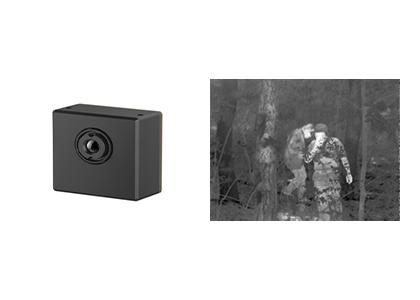
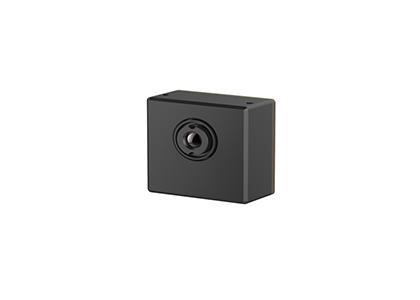
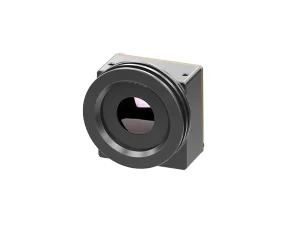
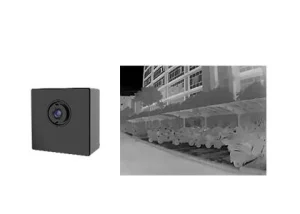
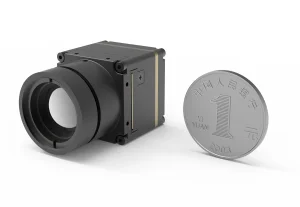
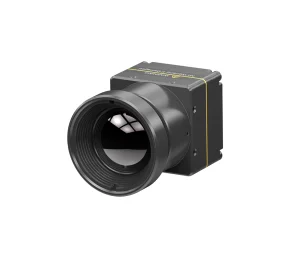
iLC212 uncooled IR imaging module, also known as the uncooled thermal module, is radiometric-capable and has available infrared non-contact temperature measurement function. It includes an exceptionally small size 256x192 / 12μm wafer level package (WLP) infrared detector that captures long-wave infrared (LWIR) spectrum that ranges from 8 to 14μm.
Compared with the same type thermal modules that have low resolution in the market, iLC212 has better image performance due to its intelligent image processing algorithm, such as Non-uniformity Correction (NUC), 3D Noise Reduction (3DNR), 2D Noise Reduction (DNS), Dynamic Range Compression (DRC), and Edge Enhancement (EE).
The iLC212 thermal imaging module has temperature measurement with a range of -20ºC~+150ºC and supports expansion and customization of the temperature measurement range. Due to its fully optimized SWaP-C, it is very suitable for wide-angle and close-range temperature measurement and monitoring in fields like security, monitoring, AIoT, and wearable devices.
Fully Optimized SWaP-C
Intelligent Imaging Algorithms
Temperature Measurement Support
Low Power Consumption
Product Parameters
Model
iLC212R
iLC212R-P
IR Detector Performance
Resolution
256×192
Pixel Size
12μm
Typical NETD
≤45mK
Image Processing
Frame Rate
25Hz/30Hz
Image Algorithm
NUC, 3DNR, DNS, DRC, EE
Electrical Specifications
Supply Voltage
3.3V±0.1V VDC
Power Consumption
0.7W
Physical Characteristics
Dimension (mm)
21×21×12.8
21×21×17.4
Weight
8.6g±1g
13g±1g
Advantages & Reviews
Technical Capabilities
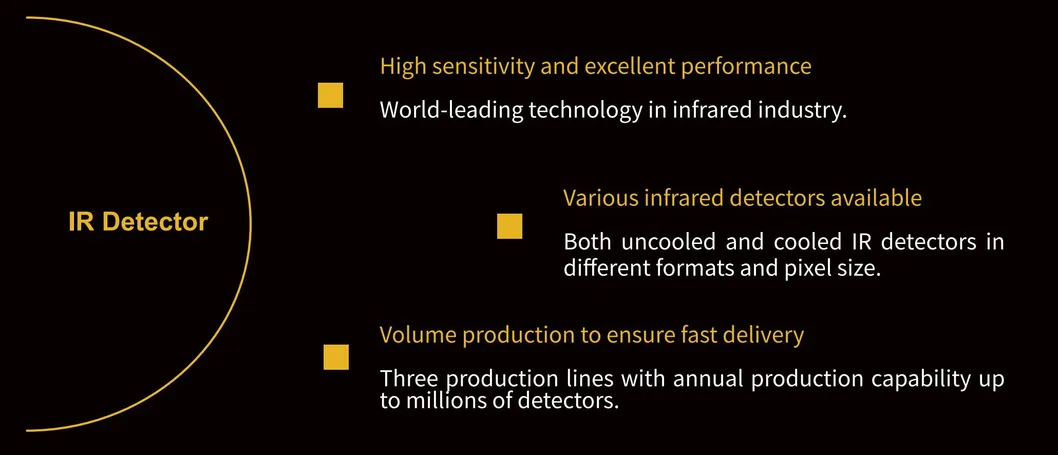
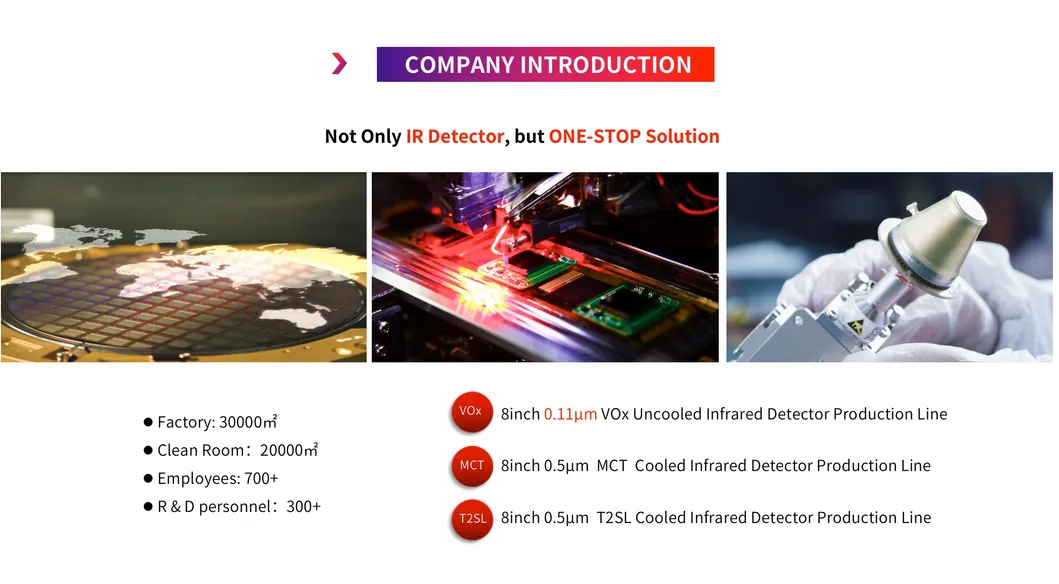
The facility covers an area of 30 thousand square meters with 20 thousand square meters clean room settled for its three 8-inch fabrication lines. All key fabrication processes such as element purification, epitaxy growth, chip tape-out and fabrication, and vacuum packaging are completed in-house.
Frequently Asked Questions
What is infrared thermal imaging?
Infrared thermal imaging is a method of using infrared radiation and thermal energy to gather information about objects, in order to formulate images of them, or get temperature information of the objects, even in low visibility environments.
What is the advantage of infrared thermal imaging?
Key advantages include seeing through total darkness, identification under camouflage, long-range detection, heat distribution detection, non-contact temperature measurement, and occupation awareness.
What is the difference between uncooled and cooled IR detectors?
Uncooled detectors operate at ambient temperature, are smaller, and cost-effective for portable devices. Cooled detectors require a cryocooler to reach extremely low temperatures, offering higher sensitivity for long-range missions but at a higher cost and larger size.
What is NETD?
NETD refers to "Noise Equivalent Temperature Difference." It measures how well a detector distinguishes small differences in thermal radiation. Lower NETD figures indicate higher thermal sensitivity.
What is a thermal imaging module?
A thermal imaging module consists of an infrared detector, lens, and hardware electronics with embedded software/algorithms. It is the minimum functional unit of a thermal imaging device.
What is WLP?
WLP refers to Wafer Level Package. It is the process of completing high vacuum packaging directly on the entire MEMS wafer before cutting. It is designed to meet miniaturization and low-cost requirements for consumer electronics.
 AxizView Camera